
As an Amazon Associate, SnoutTech earns from qualifying purchases. Some links on this page are affiliate links, at no extra cost to you.
Affiliate disclosure: SnoutTech earns a commission if you buy through links on this page, at no extra cost to you. We have not physically tested every unit mentioned – see the notes in this article. Last updated 23 September 2026.
Short Answer
If you’ve ever watched a self-cleaning litter box in action, it looks almost magical — your cat hops out, and a few minutes later the box is spotless again. But there’s nothing mystical about it. It’s a fairly simple mechanical process built around three things: weight sensors, a timed delay, and a cleaning mechanism. Once you understand those three parts, the whole category makes a lot more sense.
We’ll walk through exactly what happens from the moment your cat steps in to the moment the waste ends up sealed away, plus the different mechanical approaches brands use and what can go wrong along the way.
The Basic Cycle, Step by Step
Every self-cleaning litter box, regardless of brand or price point, follows roughly the same sequence.
1. Weight Sensors Detect Your Cat
Most units have weight sensors built into the base or the globe/tray itself. When your cat’s weight registers above a certain threshold, the box knows it’s occupied and locks the cleaning cycle so nothing moves while your cat is inside. This is a core safety feature, not an optional extra.
2. A Timer Starts the Moment Your Cat Leaves
Once the sensor detects your cat has exited and the weight drops back to zero, a countdown begins. This delay is usually somewhere between 3 and 15 minutes, depending on the model and your settings. The wait exists for two reasons: it gives solid waste time to firm up (which makes sifting more effective), and it gives a second cat time to use the box without triggering back-to-back cycles.
3. The Cleaning Mechanism Runs
This is where the mechanical approach differs most between brands, but the goal is always the same: separate clumped waste from clean litter. Depending on the design, this might be a rotating drum, a rake that sweeps across the tray, or a sifting screen that shakes waste loose.
4. Waste Drops Into a Sealed Compartment
Once separated, the waste falls into a lined drawer, bag, or sealed bin below or beside the litter chamber. Some models compress it, some just deposit it as-is. Either way, the goal is to isolate odor and waste from the clean litter and from your cat’s next visit.
5. Clean Litter Gets Redistributed
The remaining clean litter is leveled or returned to the tray so it’s ready to go. The whole cycle, from timer start to reset, usually takes somewhere between 2 and 10 minutes.
The Three Main Mechanical Designs
Not every self-cleaning box works the same way mechanically. Here’s how the major approaches differ.
Rotating Drum / Globe Design
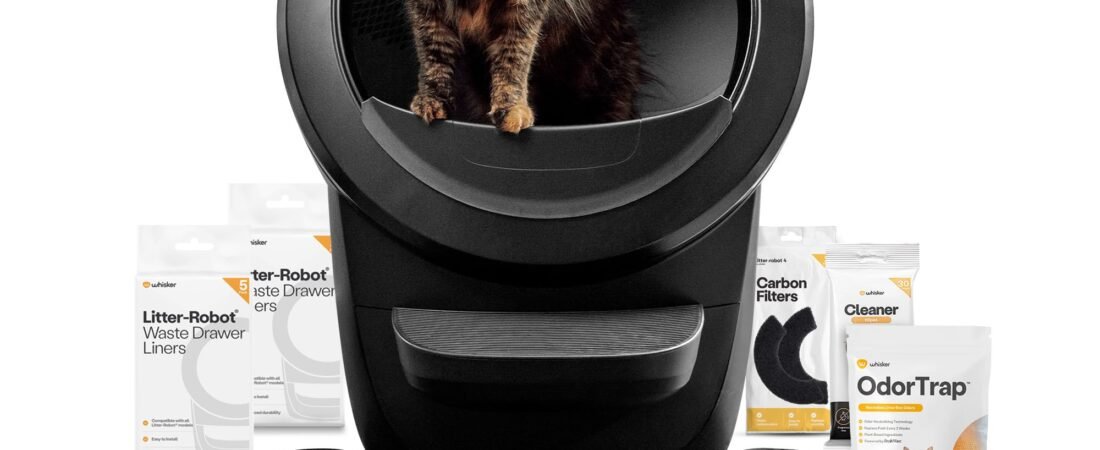
The entire litter chamber rotates slowly, and a stationary sifting screen inside separates clumps from clean litter as it turns. Waste falls through a grate into a waste drawer below. This design tends to handle clumping litter well and is popular in mid-to-premium units because the enclosed shape also helps contain odor.
Rake/Sweeping Arm Design
A rake or comb-like arm glides across a flat or slightly curved tray, pulling clumps toward a waste receptacle at one end. This is one of the oldest self-cleaning designs and tends to be simpler mechanically, which can mean fewer parts to break — but it can also be less thorough with fine or non-clumping litter.
Sifting/Shaking Tray Design
Less common in current mainstream models, this design uses a mesh or perforated tray that shakes or tilts to sift waste downward while clean litter stays on top. It’s mechanically simple but depends heavily on litter type and clump firmness to work well.
If you’re trying to decide between two specific mechanical approaches, our PETKIT vs Litter-Robot comparison breaks down how a rotating-drum design stacks up against another popular approach in real-world terms.
What the Sensors Are Actually Measuring
Self-cleaning boxes typically rely on more than one sensor type working together:
- Weight/pressure sensors: Detect entry and exit, and often estimate your cat’s weight over time.
- Infrared or laser sensors: Some models use these as a secondary check to confirm the cat has fully left the chamber before starting a cycle.
- Waste drawer fill sensors: Track how full the waste compartment is and send an app alert when it needs emptying.
- Litter level sensors: On higher-end models, these estimate remaining litter and flag when it’s running low.
This sensor stack is also why weight data shows up in companion apps — the box is already weighing your cat every time it uses the bathroom, so surfacing that data as a health trend is a relatively easy add-on for manufacturers.
Why the Delay Timer Matters More Than People Realize
A lot of buyers assume a shorter delay is always better, but that’s not quite true. If the cycle runs too soon after your cat leaves, wet clumps haven’t fully firmed up yet and can break apart during the rake or rotation, leaving debris in the clean litter. A longer, properly-timed delay generally means a cleaner, more complete cycle — it’s a trade-off between speed and thoroughness, not a flaw.
Most units let you adjust this delay in the app or on the unit itself, which is worth doing if you have a multi-cat household where back-to-back visits are common.
What Happens to the Waste After That
Depending on the design, waste ends up in one of a few places:
- A lined waste drawer that you empty manually, often lined with a compatible bag for easier disposal.
- A sealed bin with a odor-trapping lid that only opens during the cleaning cycle itself, minimizing smell exposure.
- A compaction chamber on some higher-end models that presses waste down to extend how long a bag lasts before it needs changing.
This is one of the biggest practical differences between models — how often you need to touch the waste drawer, and how bad it smells when you do. If you’re shopping specifically for a multi-cat household, waste capacity becomes a much bigger factor than it would be for a single cat, since more cats mean the drawer fills faster. Our guide to self-cleaning litter boxes for multiple cats goes deeper into how capacity and cycle frequency interact.
What Can Go Wrong Mechanically
Understanding how these boxes work also helps explain their most common failure points:
False Triggers
If a cat jumps on top of the unit, or litter shifts weight unexpectedly, some units can misread that as an occupancy event. Most modern sensors are tuned to avoid this, but it’s not impossible.
Clump Breakage
If litter isn’t clumping firmly enough — often due to using the wrong litter type, low litter levels, or humidity — the rake or drum can break clumps apart instead of cleanly separating them, leaving debris behind.
Sensor Miscalibration
Weight sensors can drift out of calibration over time, especially with very light or very heavy cats, occasionally causing a cycle to start too early or not at all.
Waste Drawer Overfill
If the drawer sensor isn’t emptied or reset promptly, some units will pause cleaning cycles entirely until you address it, which is a safety measure but can catch owners off guard if they ignore app notifications.
Do You Need to Do Anything to Keep It Working?
Yes — the automation handles the daily grind, but it’s not fully hands-off. You’ll still need to:
- Empty the waste drawer or bag on the schedule the app recommends.
- Top off litter when levels get low, since sensors and clumping both depend on adequate litter depth.
- Wipe down the tray or globe periodically, since residue can build up even with a working sifting mechanism.
- Use a litter type recommended by the manufacturer, since clumping consistency directly affects how well the mechanism works.
If you’re curious what full-time ownership of one of these units actually looks like day to day, our Litter-Robot 4 review covers real specs, rating data, and what the maintenance routine looks like in practice.
FAQ
Is a self-cleaning litter box safe for my cat?
Yes, when working correctly — the weight sensor is specifically designed to prevent the cleaning cycle from running while a cat is inside. That said, it’s worth checking sensor function periodically, especially with very light kittens or senior cats.
Do self-cleaning litter boxes work with any litter?
Not always. Clumping litter is generally required for the rake/drum/sift mechanisms to work properly, since the whole process depends on waste clumping firmly enough to separate cleanly.
How often do I need to empty the waste drawer?
It depends on the number of cats and drawer capacity, but most single-cat households empty it every 1-2 weeks, while multi-cat homes may need to do it every few days.
Why does my self-cleaning litter box smell bad even though it’s working?
This is usually a sign the waste drawer needs emptying sooner, the litter needs topping off, or the clumps aren’t firm enough and are breaking apart during the cycle instead of sealing away cleanly.
Can the cleaning cycle start while my cat is still inside?
It shouldn’t — weight sensors are built specifically to prevent this — but it’s a good idea to test and confirm the sensor is calibrated correctly after setup, and periodically afterward.
Final Verdict
At its core, a self-cleaning litter box isn’t complicated: sense the cat, wait, clean, seal, repeat. The differences between models come down to how well they execute each of those steps — how accurate the sensors are, how thorough the cleaning mechanism is, and how well the waste gets isolated afterward. Once you understand that cycle, comparing specific models gets a lot easier, because you know exactly what to look for and what can go wrong.
If you’re ready to compare specific units side by side, check out our PETKIT vs Litter-Robot breakdown or our multi-cat buying guide to find the right fit for your household.
